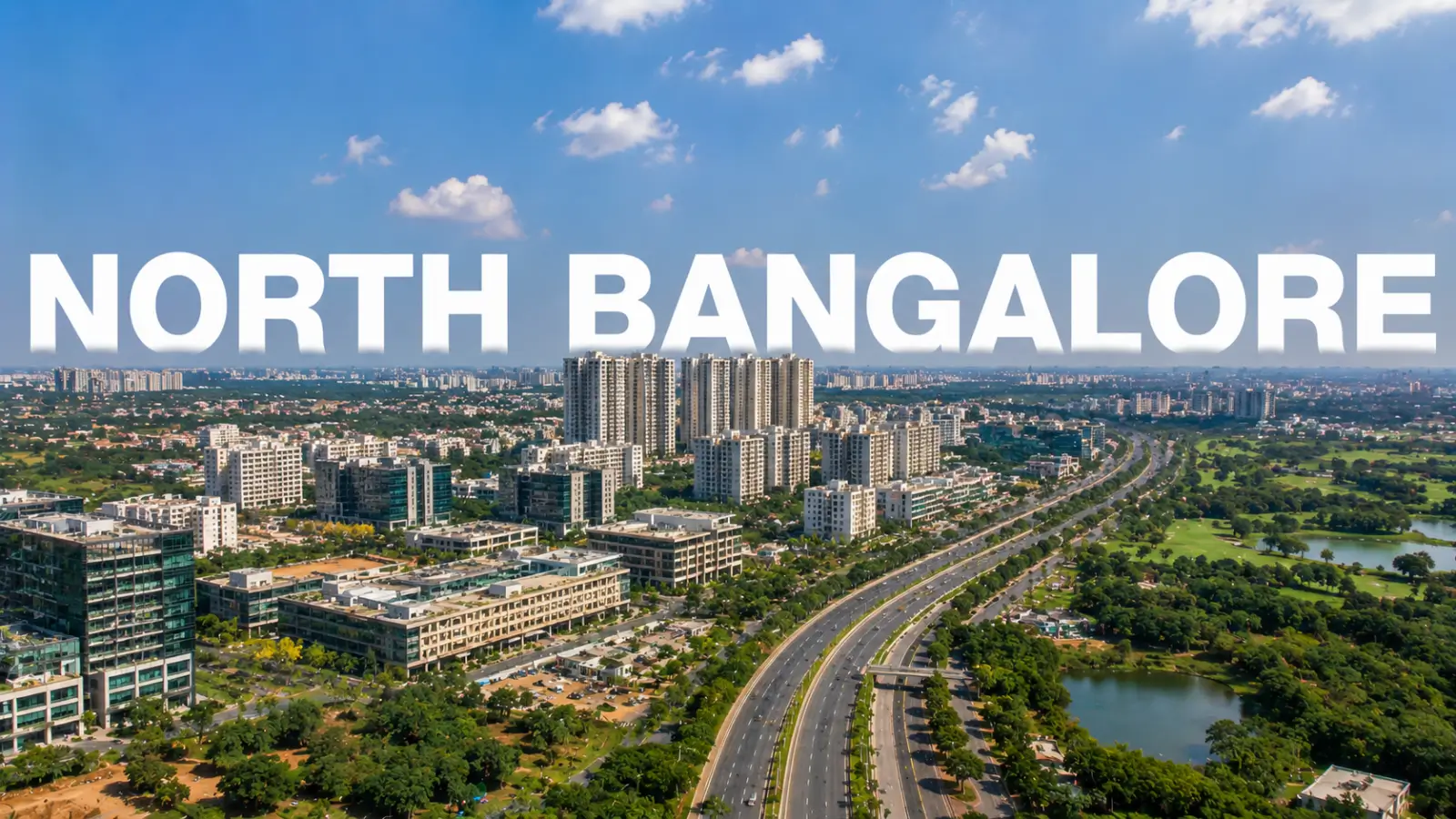
North Bangalore growth corridor explained: the airport, employment base and infrastructure driving the city’s fastest growth. Read on
Bengaluru’s centre of gravity has been shifting north for years, and buyers increasingly ask why. The North Bangalore growth corridor is not a marketing phrase but a description of where the city’s newest infrastructure and its premium demand now meet. This piece explains the drivers behind that shift and how a buyer should read them.
The Airport Effect
The single biggest driver is the airport. Kempegowda International Airport anchors the north, and around it aerospace, technology and logistics investment has clustered, drawing jobs and housing to the belt. This airport-led momentum is central to North Bangalore real estate, turning what was once the city’s quieter edge into a genuine economic region with its own gravity rather than a periphery of the older centre.
The Employment Base
Jobs turn a location into a place people settle. Manyata Business Park, MS Ramaiah Tech Park, Kirloskar Business Park and the wider northern cluster concentrate a deep pool of senior professionals along the belt. That employment base underpins both end-user and rental demand, and it is why the North Bangalore growth corridor has drawn branded developers’ strongest launches rather than their volume plays - the buyers here can afford premium product.
The Infrastructure Pipeline
Infrastructure follows and reinforces the growth. North Bangalore infrastructure now includes two metro lines converging at Nagawara, the Peripheral Ring Road and elevated road corridors, all improving connectivity across the belt. Each project widens the pool of buyers and tenants a corridor can draw from, which supports appreciation - a self-reinforcing loop where jobs justify infrastructure and infrastructure attracts more jobs and housing.
The Numbers Behind the Story
Data supports the narrative. Bengaluru ranks among the world’s fastest-growing cities, with a strong GDP growth outlook, over a million tech professionals and a large share of India’s IT exports. The Hennur corridor within the belt has recorded verified five-year appreciation of 79.1%, with 30-40% projected over the next five years. Those figures describe a corridor rising on fundamentals rather than a single announcement.
Reading Growth Honestly
Momentum is not a guarantee. Appreciation figures describe the past, projections carry uncertainty, and infrastructure timelines can slip. The sensible way to read North Bangalore real estate is as a well-supported long-term direction, not a promise of returns - strong drivers, real capital, genuine jobs, but with the normal caveats of any property market. Verify what is being built, and treat projections as informed expectation.
What It Means for a Buyer
For a buyer, the belt’s momentum is background strength rather than the whole case. A home should stand on its product, its specific location and its price, with the corridor’s growth as durable support beneath it. Read that way, buying in the North Bangalore growth corridor means positioning within the city’s strongest structural trend - provided the individual home also makes sense on its own merits.
Positioning Within the Trend
Being in the right corridor is only half the task; the specific home still matters. Within the North Bangalore growth corridor, a low-density product on a well-connected stretch captures the belt's momentum better than a poorly located unit riding the same headline. The trend lifts the belt, but individual homes participate unevenly - so use the corridor's strength as a filter, then choose a home whose product, location and price let it benefit fully from the growth building around it.
A Structural, Not Cyclical, Shift
What distinguishes the north's rise is that it is structural rather than a passing cycle. The airport is not moving, the employment clusters are deepening, and the infrastructure, once built, is permanent. That is different from a speculative surge on a single announcement, which can reverse as quickly as it arrived. A buyer positioning in the North Bangalore growth corridor is aligning with a long-running structural trend, which is a steadier foundation than betting on a short-term wave - though the individual home must still earn its place. Structural trends move slowly and reward patience, which is exactly the temperament a long property hold rewards in any case.
To sum up, North Bangalore leads the city’s growth on the back of the airport, a deep employment base and an arriving infrastructure pipeline, evidenced by real appreciation. Read it as supported long-term strength behind a sound individual decision.
Related reading: hennur road livability guide.
FAQs
Why is North Bangalore growing fastest?
The airport anchors aerospace, tech and logistics investment, a deep employment base concentrates demand, and an infrastructure pipeline reinforces the momentum.What drives North Bangalore real estate?
Jobs at Manyata and the wider northern cluster, airport-led growth, and converging metro plus road infrastructure across the belt.What infrastructure supports the corridor?
Two metro lines converging at Nagawara, the Peripheral Ring Road and elevated road corridors improving connectivity across the north.How much has the corridor appreciated?
The Hennur corridor has recorded verified five-year appreciation of 79.1%, with 30-40% projected over the next five years.Is the growth guaranteed?
No. Read it as a well-supported long-term direction, verify what is being built, and treat projections as informed expectation.
Related Articles

How the Startup Ecosystem Shapes Bangalore Real Estate
Bangalore startup real estate impact: how the startup ecosystem shapes housing demand and the high end, weighed with caution about a volatile sector.

Government Infrastructure Push and Bangalore Property Values
Bangalore infrastructure real estate impact: how the government's metro, PRR and road push lifts northern property values, weighed honestly.

Bangalore's IT Economy and Its Pull on North Bangalore Housing
Bangalore IT economy real estate: how the city's vast tech workforce pulls housing demand to the north, and how durable that connection is.
SEZs and Business Parks: Their Effect on North Bangalore Prices
SEZ impact North Bangalore real estate: how business parks like Manyata lift nearby prices and rents, and where the concentration risk lies.