Hennur Main Road locality guide: schools, hospitals, connectivity, greenery and the honest trade-offs of living on the corridor. Read on
Choosing a home is really choosing a neighbourhood, and the neighbourhood is where most buyers do the least homework. This Hennur Main Road locality guide looks past the brochure at what daily life on the corridor actually involves - the commute, the schools, the hospitals, the greenery and the trade-offs. The aim is a fair picture, not a sales pitch.
How the Corridor Took Shape
Hennur Main Road spent years as the city's quieter northern edge before employment and connectivity pulled it into the mainstream. Increasingly called the 'New Airport Road', it now links a deep layer of homes to Manyata, Hebbal and the airport. What makes Hennur Road living workable is that this growth arrived steadily rather than in a single rush, so the roads, retail and services broadly kept pace with the housing.
The Everyday Essentials
Daily needs sit close. Sparsh Hospital is 1.5 km from the Purva Horizon site, with Motherhood at 2.9 km and Cloudnine at 3.2 km, so healthcare is genuinely nearby. Legacy School is 4.4 km out and Mount Carmel College 8.6 km. Retail runs from Bhartiya Mall at 7.4 km to Mall of Asia at 9.5 km. For buyers weighing apartments in Hennur Road, that spread of essentials within a short drive is the corridor's quiet strength.
Getting Around
Connectivity is the corridor's headline. Outer Ring Road access sits around 700 m from the site, opening up Manyata at 4.5 km, the central business district at 8.7 km and the airport at 24.8 km. Two metro lines - the Blue Line and the Pink Line - converge at Nagawara nearby, which will only improve public transport as they near completion. The mix of road and rail is what keeps this stretch practical for working households.
Green and Quiet
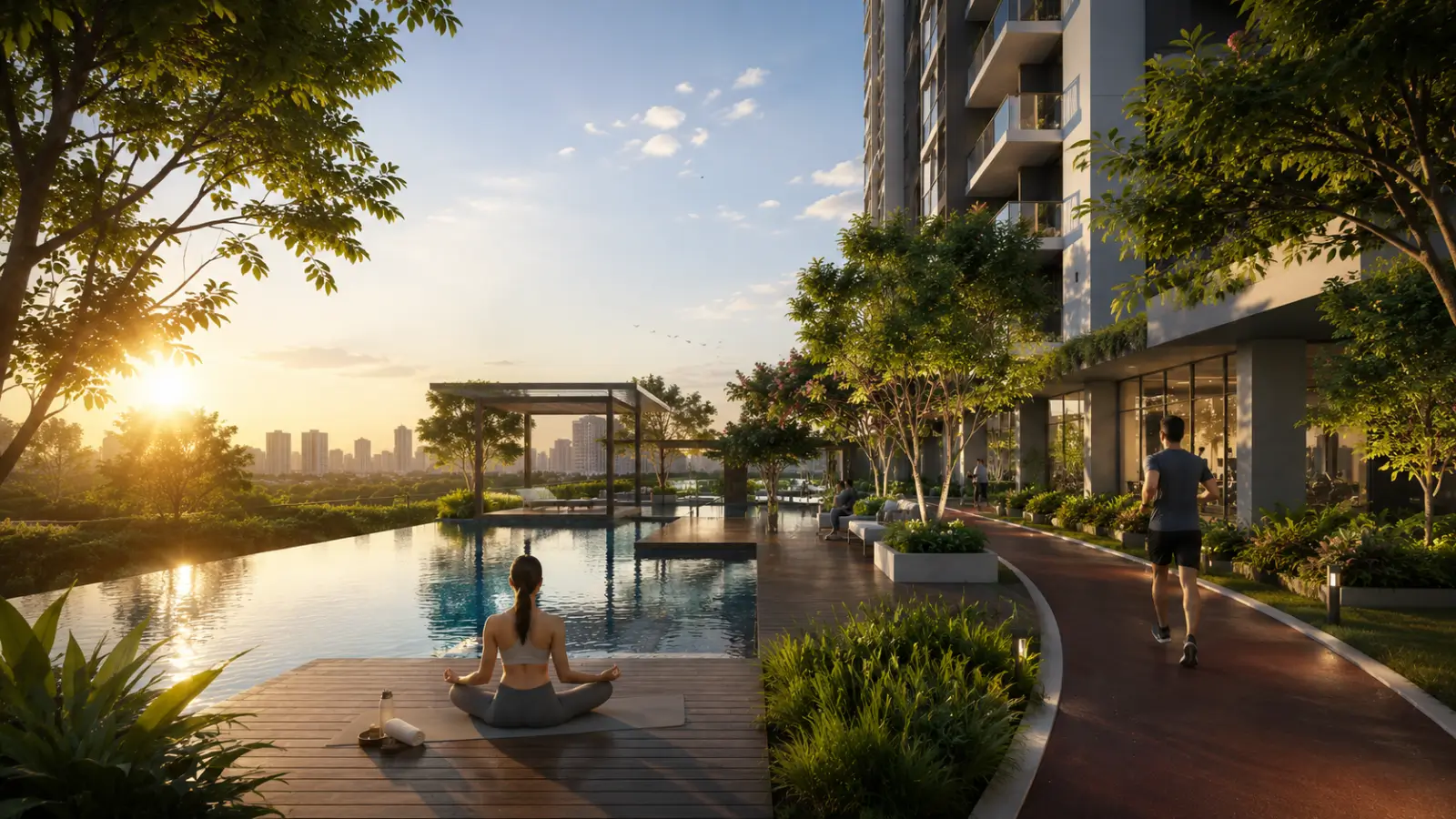
The corridor is not all concrete. Lakes at Nagawara, Rachenahalli and Jakkur sit within 5 km, and tree-lined roads soften the density. That greenery is part of what draws buyers to the belt over more built-up quadrants, and it supports a calmer version of city living than the older tech corridors offer. It is a meaningful part of the Hennur Road living proposition, not just a footnote.
The Honest Trade-Offs
No corridor is perfect. The airport, at 24.8 km, is a 35-40 minute drive rather than a short hop, and peak-hour traffic toward the ORR can build. As the belt densifies, some stretches feel busier than they did five years ago. None of this undoes the corridor's strengths, but a buyer should weigh the commute realistically against the connectivity, rather than assuming proximity to everything.
Who the Corridor Suits
Hennur Main Road works best for households anchored to the northern employment belt - Manyata, Hebbal, the ORR offices - who want space and greenery without leaving the city. It suits families needing schools and hospitals close, and professionals who value two converging metro lines. Buyers whose lives centre on south or east Bengaluru may find the cross-city drive long, which is the honest counterpoint to the corridor's appeal.
Cost of Living on the Corridor
Budget beyond the home price. This Hennur Main Road locality guide would be incomplete without noting that a premium corridor carries premium running costs - maintenance in gated communities, higher rents if you lease before buying, and the everyday expense of a well-served location. Against that, the corridor's depth of schools, hospitals and retail reduces the hidden cost of travelling far for essentials. Weigh both sides: you pay for the address, but you save on the daily logistics that a less-connected location would otherwise demand of you every single week.
A Corridor Still Improving
One more thing weighs in the corridor's favour: it is not finished. Two metro lines are converging at Nagawara, road projects are routed through the belt, and each addition tends to make daily life a little easier while supporting home values. A buyer today is stepping onto a corridor that is still adding infrastructure rather than one that has already peaked, which means the everyday experience of living here is likely to keep improving through the years ahead rather than standing still or slipping backward.
In short, Hennur Main Road offers a settled, well-connected and relatively green address with essentials close at hand, balanced against a real airport-distance commute. For buyers anchored to the north, it is one of the city's more complete corridors.
Related reading: purva horizon to manyata tech park distance.
FAQs
Is Hennur Main Road a good place to live?
For households anchored to North Bengaluru's employment belt, yes - it offers connectivity, schools, hospitals and greenery, balanced against a 35-40 minute airport drive.What is nearby on Hennur Road?
Sparsh, Motherhood and Cloudnine hospitals within 3.2 km, Legacy School at 4.4 km, and malls from Bhartiya at 7.4 km to Mall of Asia at 9.5 km.How well connected is the corridor?
Outer Ring Road access is around 700 m, Manyata 4.5 km, the airport 24.8 km, and two metro lines converge at Nagawara nearby.Is Hennur Road green?
Relatively. Lakes at Nagawara, Rachenahalli and Jakkur sit within 5 km, and tree-lined roads soften the density.What are the trade-offs of living here?
The airport is a 35-40 minute drive, and peak-hour traffic toward the ORR can build as the belt densifies.
Related Articles

How the Startup Ecosystem Shapes Bangalore Real Estate
Bangalore startup real estate impact: how the startup ecosystem shapes housing demand and the high end, weighed with caution about a volatile sector.

Government Infrastructure Push and Bangalore Property Values
Bangalore infrastructure real estate impact: how the government's metro, PRR and road push lifts northern property values, weighed honestly.

Bangalore's IT Economy and Its Pull on North Bangalore Housing
Bangalore IT economy real estate: how the city's vast tech workforce pulls housing demand to the north, and how durable that connection is.

SEZs and Business Parks: Their Effect on North Bangalore Prices
SEZ impact North Bangalore real estate: how business parks like Manyata lift nearby prices and rents, and where the concentration risk lies.